spring 2026 @ suny brockport.
Instructor info
Dr. Michael J. Kramer, Department of History, SUNY Brockport, mkramer@brockport.edu.
Who is your instructor?
Michael J. Kramer specializes in modern US cultural and intellectual history, transnational history, public history, digital humanities, and cultural criticism. He is an associate professor of history at the State University of New York (SUNY) Brockport, the author of The Republic of Rock: Music and Citizenship in the Sixties Counterculture (Oxford University Press, 2013), and the director of the Berkeley Folk Music Festival Project. He is currently working on a history of the 1976 United States bicentennial celebration and a study of folk music, technology, and cultural democracy in the United States. He edits The Carryall, an online journal of US cultural and intellectual history and maintains a blog of cultural criticism, Culture Rover. His website, with additional information about publications, projects, courses, talks, and more can be found at michaeljkramer.net.
What are we up to?
This synchronous, undergraduate/graduate, online/in-person course introduces students to public history through three interrelated pursuits: discussion and writing about conceptual and thematic readings; a guest speaker series; and a hands-on public history project. We explore key issues in public history: how it connects specialized scholarship to different audiences; how it asks all participants to share historical authority across multiple perspectives; how it raises questions of contested memory, heritage, and tradition; how historical knowledge manifests in monuments, museums, performances, displays, and spaces found in everyday life; how public history involves diverse forms of research, writing, communication, and interaction; how it intersects with other professions, such as journalism, marketing, education, government, business, and the law; how historical knowledge relates to state policy; the role of digital technologies in public uses and experiences of history; and even the very history of public history itself.
Our course in the spring 2026 semester at SUNY Brockport consists of three interrelated parts:
- Readings and discussions of themes in public history.
- The SUNY Brockport Public History Webinar, featuring guest speakers.
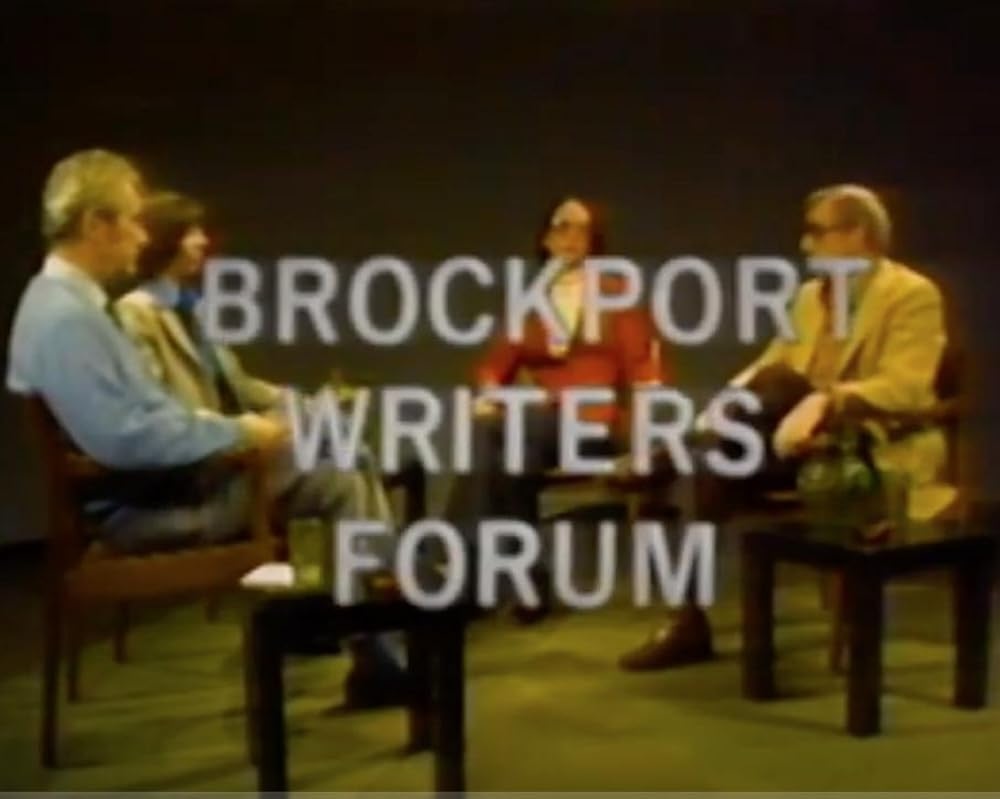
- The Writers Forum History Project, a hands-on public history project to document and curate the sixty-year history of the Writers Forum, a visiting author series at SUNY Brockport.
Students are expected to attend classes, complete writing assignments, collaborate with students in media production, and complete one final, hands-on public history project at the Writers Forum History Project.
Things you are expected to do this term
- Complete the readings
- Complete assignments
- Come to class and webinar meetings prepared and ready to participate with a constructive spirit
- Use your computer and online devices only to refer to readings. Avoid getting distracted by social media feed, etc. If it helps, employ the awesome technology of a notebook and pens and pencils to take notes (you can transfer later into a computer file)
- Learn the basics of digital project management and content creation tools. In particular we will experiment with Teams, but also students can explore the use of Zoom, Google Suite (Docs, Sheets, etc.), slideshow software (Powerpoint, etc.), WordPress, AI tools when expicitly allowed, and other digital tools.
- Collaborate with students in different programs as investigation of public history’s cross-professional nature
- Cite evidence and sources effectively using Chicago Manual of Style
- Develop your own historical expertise and how to wield it in diverse settings with a wide range of people
Required materials
- All materials available online as PDFs or links.
Schedule
The instructor may adjust the schedule as needed during the term, but he will give clear instructions about any changes.
Week 01
01-26 Introductions
01-28 What Is Public History, Exactly?
Readings Due
- Cherston Lyon et al., “Introducing Public History,” Introduction to Public History: Interpreting the Past, Engaging Audiences (NY: Roman & Littlefield, 2017), 1-14
- Robert Kelley, “Public History: Its Origins, Nature, and Prospects,” Public Historian 1, 1 (Autumn, 1978), 16-28
- Arnita A. Jones, “Public History Now and Then,” Public Historian 21, 3 (Summer 1999)
- Rebecca Conard, “Complicating Origin Stories: The Making of Public History into an Academic Field in the United States,” in A Companion to Public History, ed. D.M. Dean (Hoboken, NJ: John Wiley & Sons, Inc., 2018), 19-32
- Denise D. Meringolo, “A New Kind of Technician: In Search of the Culture of Public History,” in Museums, Monuments, and National Parks: Toward a New Genealogy of Public History (Amherst: University of Massachusetts Press, 2011), xiii-xxxiv
- Mills Kelly, “Learning Public History By Doing Public History,” in in Handbook of Digital Public History, eds. Serge Noiret, Mark Tebeau, and Gerben Zaagsma (Berlin: De Gruyter, 2022)
Week 02
02-02 Who Is the Historian in Public History?
Readings Due
- Carl Becker, “Everyman His Own Historian,” American Historical Review 37, 2 (1932): 221–36
- Thomas Cauvin, “Public history:Past, present, and future of the field,” in Public History: A Textbook of Practice (New York: Routledge, 2016), 25-99
- Roy Rosenzweig and David Thelen, “The Presence of the Past: Patterns of Popular Historymaking,” in The Presence of the Past (New York, NY: Columbia University Press, 2000), 15-36
Assignment Due
- Student Introduction.
02-04 What is the History in Public History?
Readings Due
- Mike Wallace, “Visiting the Past: History Museums in the United States,” Mickey Mouse History and Other Essays on American Memory (Philadelphia: Temple Univ. Press, 1996), 4-27
- Richard Rabinowitz, “The Object of the Object,” and ““The Invention of the Cluster,” in Curating America: Journeys through Storyscapes of the American Past (Chapel Hill: University of North Carolina Press, 2016), 179-198, 214-235.
- Bethanee Bemis, “Mirror, Mirror for Us All: Disney Theme Parks and the Collective Memory of the American National Narrative,” Public Historian 42, 1 (February 2020): 54-79
Week 03
02-09 Writers Forum Project Introduction: Jim Whorton, Brockport Writers Forum Director
Readings Due
- Brockport Writers Forum Overview Page
- Brockport Writers Forum Spring Schedule
- Writers Forum Database Entries Assigned
Assignment Due
- What Is Public History? Short Proposal
02-11 Who Is the Public In Public History?
Readings Due
- Ronald J. Grele, “Whose Public? Whose History? What Is the Goal of a Public Historian?” Public Historian, 3, 1 (Winter 1981): 40–48
- Michael Frisch, “The Memory of History,” in A Shared Authority: Essays on the Craft and Meaning of Oral and Public History (Albany, NY: SUNY Press, 1990)
- Benjamin Filene, “Passionate Histories: ‘Outsider’ History-Makers and What They Teach Us,” Public Historian 34, 1 (2012): 11–33
- Richard Rabinowitz, “History Turns Critical” and “The Community as Curator,” in Curating America: Journeys through Storyscapes of the American Past (Chapel Hill: University of North Carolina Press, 2016)
- Cathy Stanton, “Hardball History: On the Edge of Politics, Advocacy, and Activism,” History@Work: A Public History Commons, National Council on Public History, 25 March 2015
- Pero Gaglo Dagbovie, “Reflections on Black Public History: Past, Present, Future,” in Radical Roots: Public History and a Tradition of Social Justice Activism, ed. Denise D. Meringolo (Northhampton, MA: Amherst College Press, 2021), 525-540
- Lauren Jae Gutterman, “OutHistory.Org: An Experiment in LGBTQ Community History-Making,” Public Historian 32, 4 (2010): 96–109
Week 04
02-16 Writers Forum Project Discussion
02-18 Contested Meanings of Public History: The Enola Gay Case Study
Readings Due
- Paul Boyer, “Whose History Is It Anyway? Memory, Politics, and Historical Scholarship,” in History Wars: The Enola Gay and Other Battles for the American Past, eds. Edward Linenthal and Tom Engelhardt (New York: Metropolitan Books, 1996), 115-139
- Edward Linenthal, “Anatomy of a Controversy,” in History Wars: The Enola Gay and Other Battles for the American Past, eds. Edward Linenthal and Tom Engelhardt (New York: Metropolitan Books, 1996), 9-62
- Kohn, Richard H. “History and the Culture Wars: The Case of the Smithsonian Institution’s Enola Gay Exhibition,” Journal of American History 82, 3 (1995): 1036–63
Week 05
02-23 Public Art and Civic Debates of Public History
Readings Due
- Erika Doss, “One: Contemporary Public Art Controversy: An Introduction” and “Two: Public Spirit and Spirit Poles: Public Art Controversy in the Civic Sphere,” in Spirit Poles and Flying Pigs: Public Art and Cultural Democracy in American Communities (Washington, DC: Smithsonian Institution Press, 1995), 13-69
- Casey Nelson Blake, “An Atmosphere of Effrontery: Richard Serra, Tilted Arc, and the Crisis of Public Art,” in The Power of Culture: Critical Essays in American History,* eds. Richard Wightman Fox and T. J. Jackson Lears (Chicago: University of Chicago Press, 1993), 247-290
- John Michael Vlach, “The Last Great Taboo Subject: Exhibiting Slavery at the Library of Congress,” in Slavery And Public History: The Tough Stuff of American Memory, eds. James Oliver Horton and Lois E. Horton (New York: The New Press, 2006), 57-73
02-25 Webinar 01: Public Historians in and Beyond the Academy—Gretchen Sorin and William Walker, Cooperstown Graduate Program/SUNY Oneonta (Co-sponsored by SUNY Conversations in the Discipline: History and Civics in a Post-Truth Era)
Assignment Due
- Writers Forum Database Metadata Development
Week 06
03-02 Museums
Readings Due
- Adam Gopnik, “The Mindful Museum,” The Walrus, 12 June 2007
- Tim Gruenewald, “Introduction,” in Curating America’s Painful Past: Memory, Museums, and the National Imagination (Lawrence: University Press of Kansas, 2021), 1-38
- American History Workshop website
- Susannah Eckersley, “The Value of the ‘Undisciplined’: Critical Museum Studies,” Rethinking History (January 2026): 1–22
- Cary Carson, “The End of History Museums: What’s Plan B?,” Public Historian 30, 4 (2008): 9–27
03-04 Webinar 02: Museums—Michelle Finn, Curator, George Eastman Museum
Assignment Due
- Writers Forum History Project Report Draft.
Week 07
03-09 Writers Forum Project Check In
03-11 Webinar 03: Museums—Tashae K. Smith, Curator, North Carolina Museum of Art
Assignment due.
- Get out and See Some Public History Review.
Week 08
Spring Break
Week 09
03-23 Monuments and Markers
Readings Due
- Erika Doss, “Introduction” and “Chapter 1: Statue Mania to Memorial Mania: Scope of the Subject,” in Memorial Mania: Public Feeling in America (Chicago: University of Chicago Press, 2010), 1-60
- Harriet Senie, “Commemorating 9/11: From the Tribute in Light to Reflecting Absence,” Memorials to Shattered Myths: Vietnam to 9/11 (NY: Oxford University Press, 2016), 122-168
- Durba Ghosh, “Mismonumentalizing and Decolonizing: Public History as History for the Public,” American Historical Review 128, 3 (2023): 1267–74
- Juilee Decker, “The Disparity Between Us”: Rochester’s Frederick Douglass Memorial and its Inscription on the 21st-Century Landscape,” in Fallen Monuments and Contested Memorials, ed. Juilee Decker (New York: Routledge, 2023)
- Sandra Camarda, “Cybermemorials: Remembrance and Places of Memory in the Digital Age,” in Handbook of Digital Public History, eds. Serge Noiret, Mark Tebeau, and Gerben Zaagsma (Berlin: De Gruyter, 2022)
- William G. Pomeroy Foundation Website, History Page
03-25 Webinar 04: NY State Municipal Historians In Action—Lindsey Lauren Visser, Buffalo City Historian and Christine Ridarsky, Rochester City Historian
Assignment Due
- Public History Webinars 01-03/Readings Connections Short Analysis.
Week 10
03-30 Webinar 05: Foundation Work and Historical Markers Program—Anastasia Sopchak, Research Historian and Engagement Associate; Steve Bodnar, Marketing and Communications, William G. Pomeroy Foundation
04-01 Living History & Writers Forum History Project Check In
Reading Due
- Jay Anderson, “Living History: Simulating Everyday Life in Living Museums,” American Quarterly 34, 3 (1982): 290-306
- Malgorzata J. Rymsza-Pawlowska, “Hippies Living History,” Public Historian 41, 4 (November 2019), 36-55
- Tiffany Isselhardt and Lauren Cross. “You Love Them, but You Don’t Know Them: Recognizing and Welcoming Lived Experiences,” Curator: The Museum Journal 63, no. 4 (2020): 571–78
Week 11
04-06 Music and Public History
Reading Due
- Zelmarie Cantillon, Catherine Strong, Lauren Istvandity, and Sarah Baker, “Introduction,” The Routledge Companion to Popular Music History and Heritage, eds. Sarah Baker, Catherine Strong, Lauren Istvandity, and Zelmarie Cantillon (New York: Routledge, 2018), 1-10
- Marion Leonard, “Representing Popular Music Histories and Heritage in Museums,” in The Routledge Companion to Popular Music History and Heritage, eds. Sarah Baker, Catherine Strong, Lauren Istvandity, and Zelmarie Cantillon (New York: Routledge, 2018), 261-269
- Rosa Reitsamer, “Gendered Narratives of Popular Music History and Heritage,” in The Routledge Companion to Popular Music History and Heritage, eds. Sarah Baker, Catherine Strong, Lauren Istvandity, and Zelmarie Cantillon (New York: Routledge, 2018), 26-34
04-08 Webinar 06: Popular Music and/as Public History—Julia Fell, Curator of Exhibits and Woodstock Oral History Initiative at the Museum at Bethel Woods Center for the Arts; Melissa Ziobro, Curator, Curator, Bruce Springsteen Archives & Center for American Music; Andy Leach, Director of Library and Archives at the Rock and Roll Hall of Fame and Museum
Assignment Due
- Writers Forum History Project Proposal.
Week 12
04-13 Digital History
Reading Due
- Browse NY Almanack
- Roy Rosenzweig, “Scarcity or Abundance? Preserving the Past in a Digital Era,” American Historical Review 108, 3 (2003): 735–62
- Thomas Cauvin, “Digital Public History in the United States,” in Handbook of Digital Public History, eds. Serge Noiret, Mark Tebeau, and Gerben Zaagsma (Berlin: De Gruyter, 2022)
- Trevor Owens and Jesse A. Johnston, “Archivists as Peers in Digital Public History,” in Handbook of Digital Public History, eds. Serge Noiret, Mark Tebeau, and Gerben Zaagsma (Berlin: De Gruyter, 2022)
- Nancy Proctor, “Digital: Museum as Platform, Curator as Champion, in the Age of Social Media,” Curator: The Museum Journal 53, no. 1 (2010): 35–43
- Mark Tebeau, “Curation: Toward a New Ethic of Digital Public History,” in Handbook of Digital Public History, eds. Serge Noiret, Mark Tebeau, and Gerben Zaagsma (Berlin: De Gruyter, 2022)
- Valérie Schafer, “Digital Personal Memories: The Archiving of the Self and Public History,” in Handbook of Digital Public History, eds. Serge Noiret, Mark Tebeau, and Gerben Zaagsma (Berlin: De Gruyter, 2022)
- Rebecca S. Wingo, Jason A. Heppler, and Paul Schadewald, “Introduction,” in Digital Community Engagement: Partnering Communities with the Academy, eds. Rebecca S. Wingo, Jason A. Heppler, and Paul Schadewald (Cincinnati: University of Cincinnati Press, 2020)
- David Hochfelder, “Meeting Our Audiences Where They Are in the Digital Age,” History@Work, 30 March 2016
04-15 Webinar 07: Digital Public History, NY State Style—John Warren, Editor, NY Almanack
Assignment Due
- Public History Consulting with Media Production Students.
Week 13
04-20 Webinar 08 Historical Houses: Jeffrey Ludwig, Director of Education, Seward House Museum
04-22 Public History in the Trump Era/Writers Forum Project Check In
Reading Due
- Kathryn Lafrenz Samuels, “Deliberate Heritage: Difference and Disagreement After Charlottesville,” Public Historian 41, 1 (February 1, 2019): 121–32
- Brian Murphy and Katie Owens-Murphy, “Public History in the Age of Insurrection Confronting White Rage in Red States,” Public Historian 44, 3 (August 2022): 139–63
- Jennifer Schuessler, “How Trump Brought the Fight Over American History to Philadelphia,” New York Times, 5 February 2026
Week 14
04-27 Public History in Many Forms/Writers Forum Project Check In
Reading Due
- Jerome de Groot, “Digital Public History: Family History and Genealogy,” in Handbook of Digital Public History, eds. Serge Noiret, Mark Tebeau, and Gerben Zaagsma (Berlin: De Gruyter, 2022)
- Matteo Di Legge, Francesco Mantovani, and Iara Meloni, “What does it Meme? Public History in the Internet Memes Era,” in Handbook of Digital Public History, eds. Serge Noiret, Mark Tebeau, and Gerben Zaagsma (Berlin: De Gruyter, 2022)
- Yannick Rochat, “History and Video Games,” in Handbook of Digital Public History, eds. Serge Noiret, Mark Tebeau, and Gerben Zaagsma (Berlin: De Gruyter, 2022)
- Theodore J. Karamanski, “Making History Whole: Public Service, Public History, and the Profession,” Public Historian, 12, 3 (Summer 1990)
- Alix R. Green, “Historians on the Inside: Thinking with History in Policy,” in in A Companion to Public History, ed. D.M. Dean (Hoboken, NJ: John Wiley & Sons, Inc., 2018)
- Tammy S. Gordon, “Historical Display, Commerce, and Community,” in Private History in Public: Exhibition and the Settings of Everyday Life (Lanham: Rowman & Littlefield Publishers, 2010), 1-13
04-29 Webinar 09: Public History in New York State—Devin Lander, State Historian, New York
Assignment Due
- Updated Writers Forum Project Proposal.
Week 15
05-04 Webinar 10: Public History Research Lab—John Garrison Marks, Vice President of Research and Engagement/Director, Public History Research Lab, American Association for State and Local History (AASLH)
05-06 Writers Forum Project Workshop and Final Reflections
Assignment Due
- Public History Webinars 04-10/Readings Connections Short Analysis.
05-13 Final Due
- Writers Forum History Project
Assignments
- 01 – Student Introduction. 5 points
- 02 – What Is Public History? 5 points
- 03 – Writers Forum Database Metadata Development. 10 points
- 04 – Writers Forum History Project Report Draft. 10 points
- 05 – Get Out and See Some Public History Review. 5 points
- 06 – Public History Webinars 01-03/Readings Connections Short Analysis. 5 points
- 07 – Writers Forum History Project Proposal. 10 points
- 08 – Public History Consulting with Media Production Students. 5 points
- 09 – Updated Writers Forum History Project Proposal. 5 points
- 10 – Public History Webinars 04-10/Readings Connections Short Analysis. 10 points
- 11 – Final Writers Forum History Project. 20 points
- 12 – Participation. 10 Points
01 – Student Introduction.
You have just founded your own public history consulting firm. Write a one-page bio that explains your interests, your sense of history, your sense of what public history can do, where you have come from, and where you wish to go. You can be a bit creative here, but also base your bio on reality. This part we may share a bit in class.
This part will not be shared publicly. Note any special needs, concerns, or considerations about which the instructor should be aware. For instance, preferred name, pronouns, concerns, issues. This will not be shared publicly, but provides a way for you to communicate to the instructor anything to accommodate you in the course more effectively so you can feel comfortable and excel at the work ahead.
5 points
02 – What Is Public History?
Imagine a public history project proposal (exhibit, monument, event, website, instigation, or other imaginative public curation) that brings one of the readings in our course thus far to public audiences. How might you create a public history project about an essay concerning public history?! Your assignment should be two pages, double spaced, and may also include an additional two pages of sketches, drawings, diagrams, or other illustrations. All essays should use 12-point Times New Roman font, double-spaced with standard margins. Write clear, compelling, stylish, proofread, grammatically correct prose. Be sure to cite any quotations and attributions. Use your own brain, perceptions, and perspective here, avoid AI. Your goal is to think creatively and articulate a clear, compelling concept and plan: how could you share the historical knowledge in the reading or an idea from the reading as a public historian? To whom and for whom would your project be intended? What possibilities and what problems do you see emerging in your idea? Most of all explain as clearly, creatively, and compellingly as you can how your curation of the reading transforms it from an essay of specialized, scholarly communication into a public history project.
5 points
03- Writers Forum Database Metadata Development.
Develop basic biographical data in Excel spreadsheet form for 10 Writers Forum events. Include birthdate, death date if applicable, birthplace, list of publications, list of assets at Brockport, and a four-sentence biography of the writer.
10 points
04 – Writers Forum History Project Report Draft.
Develop a two-to-four page information sheet about your Writers Forum author. All drafts should use 12-point Times New Roman font, double-spaced with standard margins. Write clear, compelling, stylish, proofread, grammatically correct prose. Be sure to cite any quotations and attributions. Use your own brain, perceptions, and perspective here, avoid AI. Remember, this is a draft. Get as far as you can with it, knowing that you will revise and expand this document into a proposal and then your own project. This one is a report for you to get started and to share, as a public historian might, with others such as media production students working on their own Writers Forum projects. The draft should include:
- your name
- their name
- birth date and, if applicable, death date; place of birth
- where the person lived most of their life
- a one-two paragraph biography
- a bibliographic list of publications
- a list of existing assets (video, audio, photographs, etc.) both at Brockport and beyond Brockport with notes on location and state of materials for use in terms of format, accessibility, resolution quality, copyright issues, etc.
- a list of selected articles, essays, books, or other publications or projects about the author
- any notes or ideas for how to approach a public history about the person’s Writers Forum visit
- any concerns or issues or dilemmas that concern you and how you plan to address them
10 points
05 – Get Out and See Some Public History Review.
Get out and see some public history! You have been asked by The Public Historian to write a review of one public history project. It can be a museum exhibition, monument, historical marker, documentary television show, podcast, website, archive, historical house, oral history project, or anything else. Your task is to write a two-page, double-spaced, 12-point-font standard margins review of the project. What is it, exactly, and what does it tell you about a particular issue in public history as a field?
5 points
06 – Public History Webinars 01-03/Readings Connections Short Analysis.
Write a two-page, double-spaced reflection on one of the webinars. Connect it to one reading from the course so far. What was the webinar’s key “takeaway” for you? How does it dialogue with a reading? Be sure to follow the following format in your response: 1. What is your thesis/argument/main point? State it clearly, compellingly, and stylishly in one-to-two sentences. 2. Two reasons based on specific evidence that lead to your main thesis. State clearly, in clear, compelling stylish prose. 3. Any observations, questions, additional or subordinate ideas or implications from your thesis and specific reasons and evidence, again using clear, crisp, compelling language. All essays should use 12-point Times New Roman font, double-spaced with standard margins. Write clear, compelling, stylish, proofread, grammatically correct prose. Be sure to cite any quotations and attributions. Use your own brain, perceptions, and perspective here, avoid AI.
5 points
07 – Writers Forum History Project Proposal.
The project can be ambitious in its concept, but also it must be achievable in the time you have to complete it. Think big, then adjust and refine. The proposal is a working draft. All essays should use 12-point Times New Roman font, double-spaced with standard margins. Write clear, compelling, stylish, proofread, grammatically correct prose. Be sure to cite any quotations and attributions. Use your own brain, perceptions, and perspective here, avoid AI. The proposal should include:
- An updated and revised version of your one-to-two page report on your selected writer/visit.
- An abstract. What is the key concept for your project?
- An annotated list of selected assets you hope to use: film footage, audio, images (hi-res), archival documents, fliers, etc.
- An annotated list of the writers’ works. What do you plan to read and what will you be looking for in the materials?
- An annotated list of secondary sources. What has been written in scholarly articles, books, or newspapers and magazines about this writer?
- A brief description of the project: what will it look like? What do you hope to do?
- How is it public history?: How does the project accomplish the goals of public history (shared authority, dissemination and accessibility of history to broader audiences, participatory museology, a way for people to reflect on the past actively)
- A workplan: What is the timeline for how you will complete the project?
- Obstacles and concerns: What are the issues your concept faces, conceptually and practically? How will you address those obstacles and concerns? One to two paragraphs is fine for this, a bit more if necessary. Keep it sharp.
10 points
08 – Public History Consulting with Media Production Students.
Send in evidence of your consulting work on Media Production film work. This can be an email exchange, notes from a meeting, a recording of the meeting. Show that you have used your developing experience on your writer/visit to assist the media production students in their projects.
5 points
09 – Updated Writers Forum History Project Proposal.
Revise and refine. Add a section on what progress you have made; what changes you have made; and what concerns you still have at the top. Use the same format as draft.
5 points
10 – Public History Webinars 04-10/Readings Connections Short Analysis.
Write a two-page, double-spaced reflection on one of the webinars. Connect it to one reading from the course so far. What was the webinar’s key “takeaway” for you? How does it dialogue with a reading? Be sure to follow the following format in your response: 1. What is your thesis/argument/main point? State it clearly, compellingly, and stylishly in one-to-two sentences. 2. Two reasons based on specific evidence that lead to your main thesis. State clearly, in clear, compelling stylish prose. 3. Any observations, questions, additional or subordinate ideas or implications from your thesis and specific reasons and evidence, again using clear, crisp, compelling language. All essays should use 12-point Times New Roman font, double-spaced with standard margins. Write clear, compelling, stylish, proofread, grammatically correct prose. Be sure to cite any quotations and attributions. Use your own brain, perceptions, and perspective here, avoid AI.
10 points
11 – Final Writers Forum History Project.
All materials should use 12-point Times New Roman font, double-spaced with standard margins. Write clear, compelling, stylish, proofread, grammatically correct prose. Be sure to cite any quotations and attributions. Your final project should feature:
1 – A one page overview of the project, including:
- A catchy title
- A one-paragraph description of the project
- The nature of the intended audience for the project
2 – A completed digital component.
- This can be a slideshow, an audio narrative, a video narrative, a multimedia set of images and texts. Professor Kramer will assist you with the technical components of your final project.
3 – A complete proposal for an in-person exhibition display about your author, including explanation of what the exhibition display will look like, what assets it will include, how these will be displayed, and justification for the exhibition design. Two-three pages. You are welcome to include scanned or digital diagrams, sketches, or other illustrations.
4 – Your revised and completed “info report” about the subject of the project. This should include:
- An updated and revised version of your one-to-two page report on your selected writer/visit.
- An abstract. What is the key concept for your project?
- An annotated list of selected assets you used: film footage, audio, images (hi-res), archival documents, fliers, etc.
- An annotated list of the writers’ works.
- An annotated list of secondary sources.
- A brief description of the project. You can use the description from the overview page if you wish.
- How is your project a form of public history?: How does the project accomplish the goals of public history (shared authority, dissemination and accessibility of history to broader audiences, participatory museology, a way for people to reflect on the past actively). One to two paragraphs is fine for this, a bit more if necessary. Keep it sharp.
- Obstacles and concerns: What are the issues your project faced or continues to face, conceptually and practically? How did you address those obstacles and concerns?
20 points
12 – Participation
- 10 points – one comment per meeting that brings up a new point or responds to another comment effectively
- 8 points – attentive listening and occasional comment that brings up a new point or responds to another comment effectively
- 6 points – attentive listening
- 4 points – attendance
- 0 points – missed more than 4 meetings
Criteria for evaluation
Yes! = A-level work.
- on-time submission of assignments
- for class meetings, regular attendance and timely preparation overall, plus insightful, constructive, respectful, and regular participation in class discussions
- a thorough understanding of required course materials as expressed in seminar meeting participation
For writing assignments: - accurate, clear, well-written responses to prompts when relevant
- a credible, persuasive argument of originality
- argument persuasively supported by relevant, accurate, and clearly explicated evidence
- persuasive integration of argument and evidence in an insightful overall analysis
- excellent organization: introduction, topic sentences, coherent paragraphs, use of evidence, contextualization, analysis, smooth transitions, conclusion
- graceful, clear, logical prose style with effective word choice, avoidance of clichés, and free of spelling and grammatical errors
- correct page formatting when relevant, with numbered pages, regular margins, double-spaced text, and 12-point Times New Roman font
- accurate formatting of footnotes and, when required, bibliography with required citation and documentation using Chicago Manual of Style guidelines
Getting Closer = B-level work, It is good, but with minor problems in one or more areas that need improvement.
Needs Work = C-level work is acceptable, but with major problems in several areas or a major problem in one area.
Needs A Lot of Work = D-level work. It shows major problems in multiple areas, including missing or late assignments, missed class meetings, and other shortcomings.
Nope = E-level work is unacceptable. It fails to meet basic course requirements and/or standards of academic integrity/honesty.
Citation and style guide: Using Chicago Manual of Style
Historians generally use Chicago Manual of Style for citation, bibliography, and formatting. Please familiarize yourself with Chicago Manual of Style.
- There is a nice overview of citation at the Chicago Manual of Style website
- For additional, helpful guidelines, visit the Drake Memorial Library’s Chicago Manual of Style page
- You can always go right to the source: the Chicago Manual of Style is available for reference at the Drake Memorial Library Reserve Desk
Tips on file management
As a public historian, you need to develop a good personal system of file management and workflow. Here are some tips.
- Create a folder for your classwork on OneDrive, which you have access to for free through SUNY Brockport.
- Adopt a file naming convention for your files so you can find relevant files.
- Preserve drafts. Don’t erase things, start a new file with a new draft number (Draft 01, Draft 02, etc.).
- Note the difference between locating, attaching to an email, or uploading the actual file compared to the OneDrive URL link to the file. If you send the file itself, there are no access issues for the receiver. If you wish to share a file for collaboration, use the link, but be sure to set the permissions properly for the receiver to access the file. For more on the story of file directories and changes to how OneDrive and other cloud platforms change our perception of them, see the excellent article, Monica Chin, “File Not Found: A Generation That Grew up with Google Is Forcing Professors to Rethink Their Lesson Plans,” The Verge, 22 September 2021.
- Find your way to a file and data management system that works for you.
Learning Objectives
History Department
- Evaluate historical sources so as to work through conflicting explanations, appreciate multiple perspectives, cultivate empathy, and hone research and analytical skills.
- Identify the relevant contexts of historical events, trends, ideas, and/or interpretations so as to develop a more sophisticated understanding of the past and their ability to draw relevant connections between past events.
- Analyze the causes of change and continuity among historical events, trends, ideas, and/or interpretations to develop a more sophisticated understanding of past and present societies.
- Create logical, organized arguments supported by relevant evidence from sources that enable them to advance an informed, persuasive analysis.
- Produce clear written communication so as to enable them to effectively present arguments, evidence, explanations, and analysis.
- Produce a synthesis of historical content that draws meaningful conclusions so as to enable them to evaluate and integrate information as well as build a more informed vision of the past and how it shapes the present.
Writing consultation
Writing Tutoring is available through the Academic Success Center as well as the History Department. Consultation helps at any stage of writing and at any level of writing expertise. Make use of this resource!
Research consultation
The librarians at Drake Memorial Library are an incredible resource. You can consult with them remotely or in person. To schedule a meeting, go to the front desk at Drake Library or visit the library website’s Consultation page.
Attendance policy
You will certainly do better with evaluation in the course, learn more, and get more out of the class the more you attend meetings, participate in discussions, complete readings, and finish assignments. That said, lives get complicated. Therefore, you may miss up to four class meetings, with or without a justified reason, with no penalty. You do not need a note from a doctor. If you are ill, please stay home and take precautions if you have any covid or flu symptoms. You may join class remotely if you are ill. Masks are welcome in class if you are still recovering from illness or feel sick. After four absences, subsequent absences will result in reduction of final course grade at the discretion of the instructor. Please note: the instructor does not offer extra credit in this course.
Use of AI tools
In this course, we may use generative AI tools to examine the ways in which these kinds of tools may inform our exploration of the topics of the class. You will be informed as to when and how these tools will be used, along with guidance for attribution if/as needed. Any use of AI tools outside of these parameters constitutes plagiarism and may result in a charge of academic dishonesty as defined in the SUNY Brockport Academic Dishonesty Policy. For more on the evolving evaluation of AI use at SUNY Brockport, see the AI for Faculty website.
Disabilities and accommodations
In accordance with the Americans with Disabilities Act and Brockport Faculty Senate legislation, students with documented disabilities may be entitled to specific accommodations. SUNY Brockport is committed to fostering an optimal learning environment by applying current principles and practices of equity, diversity, and inclusion. If you are a student with a disability and want to utilize academic accommodations, you must register with Student Accessibility Services (SAS) to obtain an official accommodation letter which must be submitted to faculty for accommodation implementation. If you think you have a disability, you may want to meet with SAS to learn about related resources. You can find out more about Student Accessibility Services or by contacting SAS via the email address sasoffice@brockport.edu or phone number (585) 395-5409. Students, faculty, staff, and SAS work together to create an inclusive learning environment. Feel free to contact the instructor with any questions.
Discrimination and harassment policies
Sex and Gender discrimination, including sexual harassment, are prohibited in educational programs and activities, including classes. Title IX legislation and College policy require the College to provide sex and gender equity in all areas of campus life. If you or someone you know has experienced sex or gender discrimination (including gender identity or non-conformity), discrimination on the basis of sexual orientation or pregnancy, sexual harassment, sexual assault, intimate partner violence, or stalking, we encourage you to seek assistance and to report the incident through these resources. Confidential assistance is available on campus at Hazen Center for Integrated Care. Another resource is RESTORE. Note that by law faculty are mandatory reporters and cannot maintain confidentiality under Title IX; they will need to share information with the Title IX & College Compliance Officer.
Statement of equity and open communication
We recognize that each class we teach is composed of diverse populations and are aware of and attentive to inequities of experience based on social identities including but not limited to race, class, assigned gender, gender identity, sexuality, geographical background, language background, religion, disability, age, and nationality. This classroom operates on a model of equity and partnership, in which we expect and appreciate diverse perspectives and ideas and encourage spirited but respectful debate and dialogue. If anyone is experiencing exclusion, intentional or unintentional aggression, silencing, or any other form of oppression, please communicate with me and we will work with each other and with SUNY Brockport resources to address these serious problems.
Disruptive student behaviors
Please see SUNY Brockport’s procedures for dealing with students who are disruptive in class.
Emergency alert system
In case of emergency, the Emergency Alert System at The College at Brockport will be activated. Students are encouraged to maintain updated contact information using the link on the College’s Emergency Information website.
SUNY Brockport required syllabus policies & statements
Please see the SUNY Brockport Required Syllabus Policies & Statements webpage for additional information.