the united states bicentennial and the coming of the culture wars.
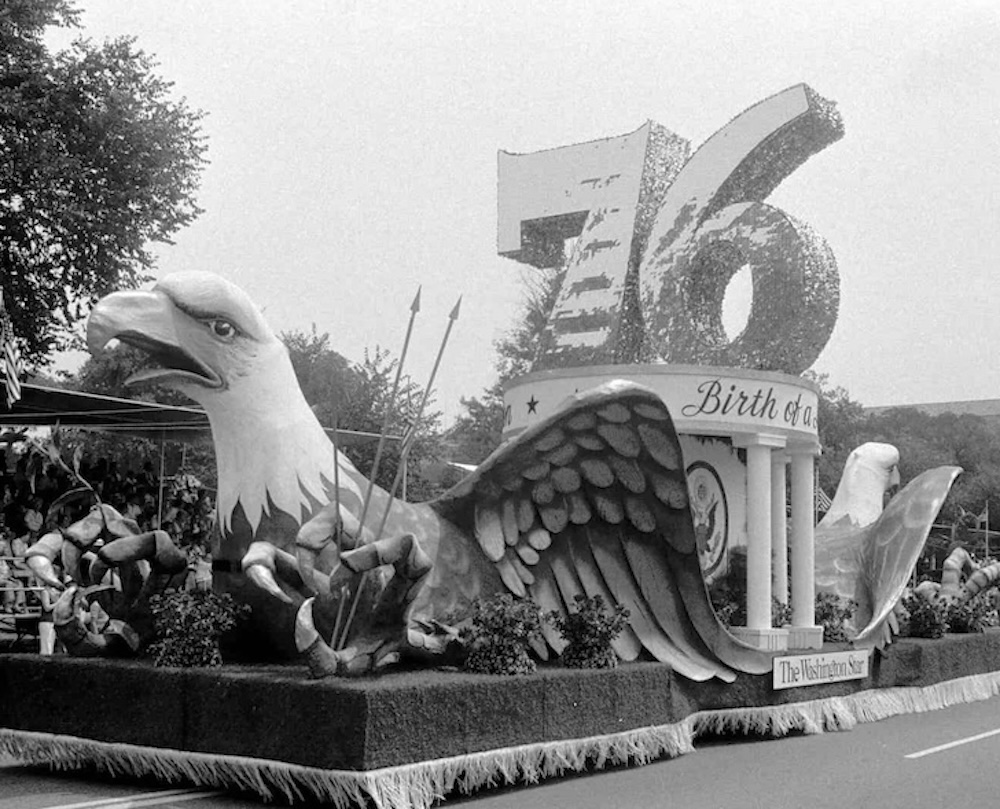
From Plymouth Rock to acid-rock
From 13 states to Watergate
The blues is grown, but not the home
The blues is grown, but the country has not
The blues remembers everything the country forgot
It’s a bicentennial year, and the blues is celebrating a birthday
And it’s a Bicentennial Blues.
— Gil Scott-Heron
We’re all confused, what’s to lose?
You can call this song the United States Blues.
Wave that flag, wave it wide and high.
Summertime done, come and gone, my, oh, my.
— Robert Hunter/Grateful Dead
The celebrations of the 1976 US Bicentennial marked a key transition in post-Vietnam War American life. This short book offers a history of the 1976 Bicentennial celebrations and a serious of provocations about its significance and meaning. From the contested centralization of the celebrations in the American Revolution Bicentennial Commission/Administration to the Bicentennial’s presence in products of popular culture to dreams among some for a new New Deal in governmental cultural policy to the vast vernacular material culture of both consumer and homemade artifacts to the surprising networked computerization of the Bicentennial to international dimensions of the event, the Bicentennial reveals serious cultural and political business conducted in seemingly nostalgic and sentimentalized commemorative fun, helping us glimpse how the 1970s were, in the words of historian Judith Stein, a “pivotal decade.”
A moment of strange combinations of culture and politics, tacky kitsch and high-minded seriousness, pop and policy, the Bicentennial reminds us that history happens both in the halls of power and in the streets. So too, it occurs both through intense mediation and by people’s direct actions. Ceremony matters, and the ceremonies of the 1976 US Bicentennial reshaped the political and social landscape of the nation in ways that continue to reverberate today: centralization gave way to new forms of power exercised through decentralized, networked means; culture became a battlefield for politics, a harbinger of the “culture wars” to come in the 1980s and 1990s; and the US emerged in new form as a nation and a people after the Bicentennial era. In contemporary activities ranging from the 1619 Project to contested interpretations of Constitutional law to the very nature and purpose of government itself in the United States, we can discern not only the direct influence of the original founding of the United States of America in 1776, but also the lasting effects of the nation’s “redeclaration” of itself two hundred years later during the Bicentennial.
Wave That Flag argues that a new—and in many respects far more fraught and tattered United States—comes into view. Seeming to be a celebration of the past, the Bicentennial reveals the origins of subsequent decades of culture war, the polarization of right and left, the rise of decentralized and often computerized networks, the role of commerce and popular culture in shaping the national political imagination, and the growing presence of increasingly uncivil confrontations over the civic culture of the nation itself in a globalizing world.
Chapter Outline
- Introduction: Tall Ships—Looking out at New York Harbor, July 4th, 1976
- Chapter 1: Political Shocks—The Bicentennial Commission, the People’s Bicentennial Commission, and the Coming of the Culture Wars
- Chapter 2: Lost Seeds—The Hopes for a New New Deal and the Centralization of the Bicentennial
- Chapter 3: Serious Schlock—The “Buy-centennial” and the Commercialization of Patriotism
- Chapter 4: Shouts and Murmurs—Waving the Flag in Popular Culture and the Arts
- Chapter 5: Cybernetics—BINET’s Decentralized Electronic Network and the Computerization of the Bicentennial
- Chapter 6: The Shot Heard Round the World—International Responses to the US Bicentennial
- Epilogue: From Bicentennial to Semiquincentennial, 1976 in 2026 and Beyond