the accumulation of the sixties, in five not-so-easy dance steps.
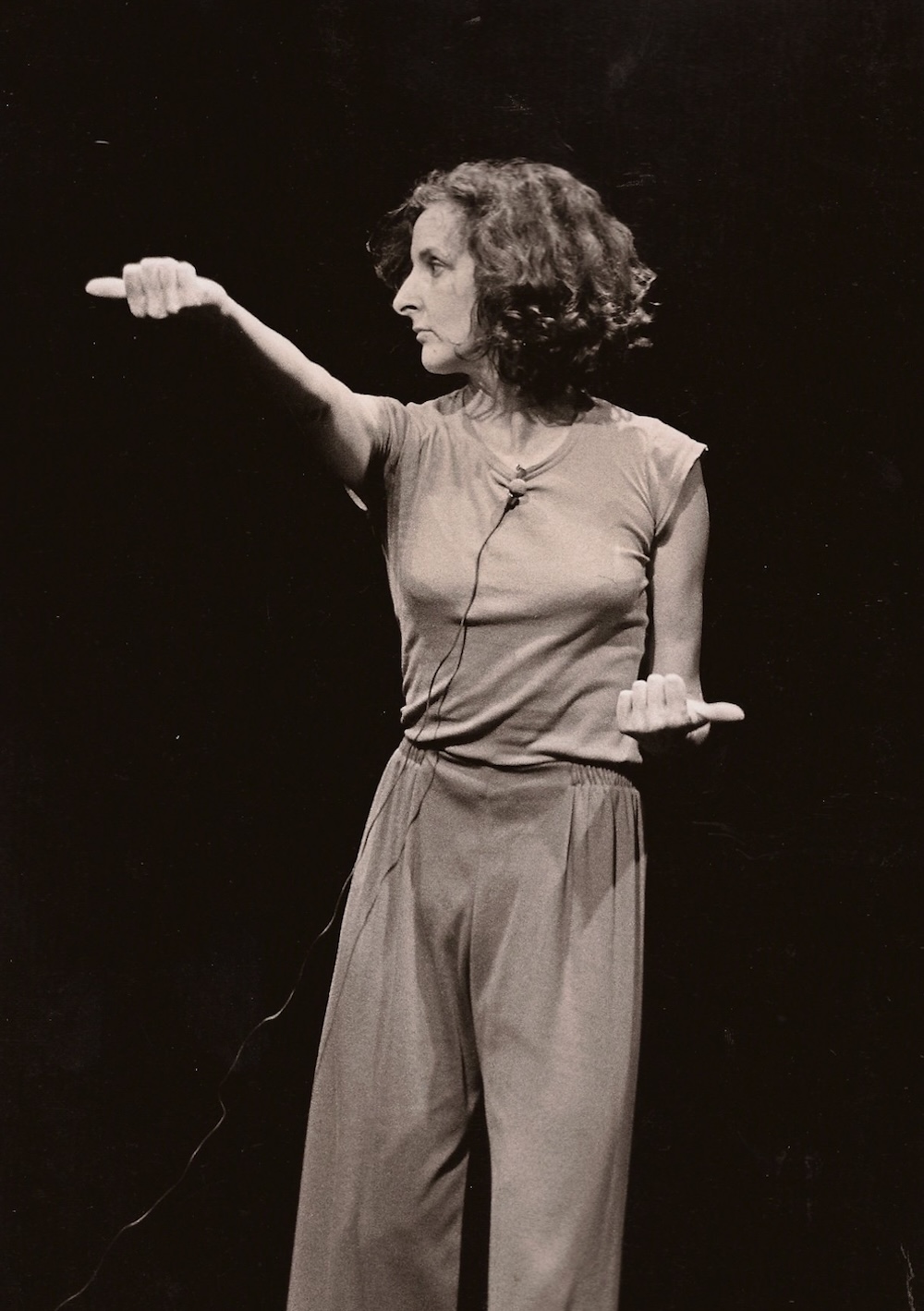
If asked to name one art performance that sums up the 1960s counterculture, I would choose Trisha Brown’s Accumulation, from 1971 (seen here in an excerpt). Set to the song “Uncle John’s Band” by the ur-countercultural rock group the Grateful Dead, the piece typically features a solo female dancer who adds one simple movement to the next until they gather a kind of organic rhythm. The dance movement is at once pared down and intricate. It is loose-limbed and unrigid. It quietly but fiercely rejects the posture of ballet. There is an insistent informality to the dance. It is sequenced, but casual. It is natural, but also conveys just a hint of the robotic. It is relaxed, casual, cool, at ease, but it also grows obsessive in its repetitions. It is earthy and grounded, but also full of air. It conveys a sense of lightness and joy, but profoundly so. It is not lightweight.
The dancer steps out in front of the curtain, on the stage apron, as if to signal a casual moment of direct address. Yet the deadpan expression is there, suggesting that this is a kind of interior, almost intimate space. The audience is at once invited into conversation but perhaps also merely a mirror. The music begins, a lilting acoustic guitar with maracas and clave ambling along behind the melody. First, the dancer’s thumbs gesture like a hitchhiker’s in search of a ride. Then the hips sway and the dancer steps back and forward as if tangoing with the audience. One leg kicks up and down. The thumbs move again in small circles at the waist. The dancer inhales and reaches up skyward, drawing the hands in to the belly and up over the head in what resembles the outstretched end of a yogic sun salutation. Repeat, but with variation and, of course, accumulation.
The pace is easy-going, the body loose and relaxed. Limbs are elastic, without the rigidity of classical ballet or even much other modern dance. The beauty of the piece is striking. It is almost goofy, yet a sense of dawning spiritual illumination intensifies over time. The dancer’s subjectivity, even interiority, flickers across the body. It is sometimes centered, but just as often it seems to gesture to external spaces. There is a kind of awakening to awareness, community, alertness, connection in the performance, but it is, after all, a solo. There is a solitary aloneness, even a kind of outright loneliness, to the performance. You feel like something is being tested out here. A trial run. A person considering their own situation. We are watching an experiment. The dancer controls the gestures, but the movement also seems to arise from somewhere else, from other sources.
What is the force guiding these movements, these decisions? Are they coming from within or without? The performance is poised between organic self-generation of movement and some kind of guided mechanistic force. We live between action and reaction.
The dancer alludes to numerous sixties roles in the brief six-minute performance. She is, first of all, female. I have come to believe that the counterculture was, despite its retrograde aspects, driven most of all by transformations in gender norms. The changing boundary between femininity and masculinity is key. The dancer is an Even Cowgirls Get the Blues adolescent girl setting out on the road in adventure. She is also a religious seeker seeking out the spiritual, meditating at sunrise. She is part dancer under the psychedelic strobe light flash, deep within herself among the ballroom crowd. She is also dancing in her bedroom alone, listening to a song emanate from her record player, imagining community through the vinyl grooves and electronic signals. She has discovered love. She is pleased, amazed, in the moment. She understands and inhabits her own body in a new way. She feels herself move through space: sweetly, sentient, grounded, in tune.
This performance encapsulates the sixties counterculture because it is about an individual facing the universe: from the possibility of community with others to the discovery of the self to the perception of humanity’s place within larger, non-human realms. The dancer is not a revolutionary here. She has not mapped out an ideology. Instead, she achieves an openness and dexterity of mind, spirit, and body; she discovers a willingness to interact and transform and a desire to know and feel anew. This “consciousness,” as it was called at the time, was the invisible vapor fueling the sixties counterculture. It was more a feeling than an idea. It was an affective state, not an ideological position. It was a mood not a manifesto. Though of course these binaries were in continual dialectic interaction with each other, and continue to be so.
Trisha Brown’s Accumulation suggests how the sixties counterculture exploded into being from the relationship between sensation and sensibility. As the dancer repeats her bodily movements, she adds new insights. She accumulates—ideas, awareness, experience, knowledge—but it is more inquisitive than acquisitive. Moving and then moving again, reaching out and returning, she establishes connections and then pulls them back into herself for consideration. What is that? What is this? How does that feel? Where am I in relation to the world, to experiences, to myself?
There were many dystopian aspects to the sixties counterculture, however the openness and discovery expressed in Accumulation presents the sixties counterculture at its best.