recovering roszak’s countercultural social criticism.
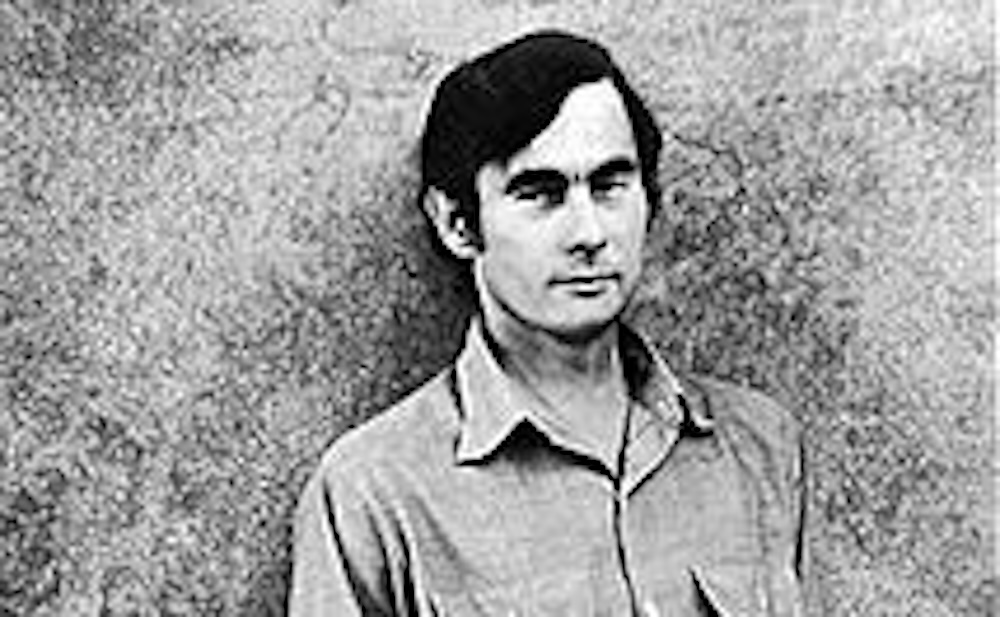
But as a factor in the political arena of the modern world, that cry of the heart was distinctly new—so new, in fact, that it was difficult to imagine it being successfully communicated to society at large. And, of course, it wasn’t. Little more than the sensational surface of the protest filtered through the mass media: gestures of irreverent disaffiliation that had to do with drugs and sex, jarring new styles of music and dress, obscene language and bizarre alternative lifestyles. Nevertheless, matters of remarkable philosophical substance did come to be hotly debated by a larger public than had ever participated in the serious political deliberations of any modern society.
—Theodore Roszak, “Introduction to the 1995 Edition,” The Making of a Counter Culture: Reflections on the Technocratic Society and Its Youthful Opposition, originally published 1969
This fall, I am presenting a paper on the social criticism of Theodore Roszak at the Society of United States Intellectual History’s annual conference. Rereading Roszak’s bestseller The Making of a Counter Culture, I came across the passage above in the introduction to the 1995 edition of his book (the introduction is itself a remarkable essay, worth assigning in any course on the 1960s or the post-World War II era as a whole).
The passage made me remember how crucial Roszak’s book was for my own understanding of the counterculture. Roszak wrote the bulk of the book as essays for The Nation and other publications mostly while based in London and editing a radical pacifist journal before settling in the San Francisco Bay Area. The book is far more subtle and rich than usually assumed by historians.
Generally The Making of a Counter Culture gets lumped with the superficial twaddle of Charles Reich’s The Greening of America and other “greatest hits” books of that time period and topic. Rereading Roszak’s collection of essays now, however, I once again appreciate how impressive Roszak’s ability was to take the counterculture seriously without ever uncritically celebrating it.
People assume the book is sociological hagiography to the youth culture of the 1960s, or at the very least reportage on “those crazy kids,” but it isn’t. Roszak’s book is in fact an investigation of the ideas circulating and percolating around younger people (and many older people) during the 1960s. He balances the social theories of Herbert Marcuse, Norman O. Brown, and others against his own observations of the movements emerging, nascently, among young people themselves. He has no illusions of utopia, but he also is no crackpot realist. He manages to write a balanced exploration of a movement that was curious about what it meant to come unhinged. Sometimes the rebellion itself cracked apart and it broke away from sanity. Roszak was no fool and criticized this. Just as often, however, the cluster of ideas called the counterculture noticed how unhinged those in power had become. Bringing a deep appreciation for the Romantic tradition to bear on his contemporary social analysis, Roszak pointed out that the technocratic turn of modern society, its commitments to rationalism, drove it to the brink of irrationality. The youth culture inherited these problems, but Roszak discerned efforts to reject and overcome it. The drugs and other excesses could produce stupidity, but there was a serious effort to embrace “matters of remarkable philosophical substance” in service of a shift in politics and culture.
Roszak’s book is, quietly, a kind of engaged social criticism to which many historians now aspire. To be sure, the book is not perfect, either in style or content, but it remains quite sharp, clear-eyed stuff to my eyes.
In writing my own book, The Republic of Rock: Music and Citizenship in the Sixties Counterculture, I noticed that Roszak omitted the importance of music in his original set of essays that, in many respects, gave the counterculture its name.In the 1995 introduction, he noticed this omission as well:
If there is one aspect of the period that I now wish had enjoyed more attention in these pages, it is the music. Music inspired and carried the best insights of the counter culture—from folk protest ballads and songs of social significance at the outset to the acid rock that became the only way to reflect the surrealistic turn that America was to take at the climax of the Vietnam War.
Music, for Roszak, became nothing less than “the only way to reflect the surrealistic turn that America was to take at the climax of the Vietnam War” and it “inspired and carried the best insights of the counter culture.” Trying to make sense of how popular music—commercialized; commodified; Americanized; full of problematic issues of racism, sexism, and more; as much as part of the war as separate from it—could also sustain “matters of remarkable philosophical substance” that become “to be ”hotly debated by a larger public than had ever participated in the serious political deliberations of any modern society” was what I wanted to address in my study. As a cultural historian, I ended up doing so hrough careful archival interpretation, but it was Roszak’s discerning analysis, in the noise of the moment, that opened the door to this inquiry.
This is a thinker who deserves reconsideration.
It never ceases to irk me when people speak of the “counterculture” – if there ever really was such a thing – as something sui generis in American history as Roszak does when he says, “that cry of the heart was distinctly new.”
Statements such as this show a lack of awareness of the Transcendentalists (let’s throw in Walt Whitman for good measure) and surely Roszak knows better than this. I can’t believe he doesn’t know of the Transcendentalists? Is he not aware of how similar were the paths that the “counterculture” and the Transcendentalists cut out for themselves. Maybe he deals with it in the book. (I read it too many years ago to remember but I may dust it off again and take a look.)
After all, “it was the quietly desperate Transcendentalists who sounded the alarm (about such things as slavery, an unjust war, and the dehumanizing of the newly instituted factory system) – they claimed that our true Manifest Destiny was to discover our own souls. They told us that the restless anticipation we felt was really for union with our higher selves and that it was a fool’s game to run off to the frontier in search of an illusory El Dorado when the only frontier worth exploring lay inside our heads. Since American Transcendentalism is but a mystical form of Puritanism, it was not surprising that the call was to another, higher, world – a world far removed from the gross bonds of material existence.”
Oh sure there were greater numbers of people involved in the sixties (the country was larger and had more people including the Boomers) and the Transcendentalists had no televisions, radios, etc., to help them spread the word. Neither did they have electronic instruments so old Walt couldn’t jam down on “Out of the Cradle Endlessly Rocking” through the Wall of Sound, but they managed somehow to be effective. Nor was there any LSD around but there was an awareness of the relationship between available drugs and poetic inspiration. As Emerson observed:
“For if in any manner we can stimulate this instinct, new passages are opened for us into nature, the mind flow into and through things hardest and highest, and the metamorphosis is possible. For it is the reason why bards love wine, mead, narcotics, coffee, tea, opium, the fumes of sandalwood and tobacco, or whatever other promises of animal exhilaration.”
I don’t know what causes this myopia among those who should know better but I might be persuaded to place a wager on the fact that it comes from seeing things through a lens of oppositions in the “political arena.” Things do not always arise in that arena and are not brought into being as a matter of opposition. Sometimes going a different way is an affirmation of what that choice involves. This is the point Jack Kerouac makes in his essay “The Origins of the Beat Generations. He does not see the Beats growing out of opposition or anger but rather evolving into existence from joy, affirmation of life, and celebration. They were about the soul. Remember as well that the essence of revolution is going around something rather than through it.
As Kerouac wrote:
“There is no doubt about the Beat Generation, at least the core of it, being a swinging group of new American men intent on joy…. Irresponsibility? Who wouldn’t help a dying man on an empty road? No and the Beat Generation goes back to the wild parties my father used to have at home in the 1920’s and nobody could sleep for blocks around and when the cops came they always had a drink. It goes back to the wild and raving childhood of playing the Shadow under windswept trees of New England’s gleeful autumn, and the howl of the Moon man on the sandbank until we caught him in a tree (he was an “older” guy of 15), the maniacal laugh of certain neighborhood madboys, the furious humour of the whole gangs playing basketball till long after dark in the park, it goes back to those crazy days before World War II when teenagers drank beer on Friday nights at Lake ballrooms and worked off their hangovers playing baseball on Saturday afternoon followed by a dive in the brook — and our fathers wore straw hats like W. C. Fields. It goes back to the completely senseless babble of the Three Stooges, the ravings of the Marx Brothers (the tenderness of Angel Harpo at harp, too).”
Vietnam was a heavy and dark presence everywhere during those times (think of Bartholomew Cubbins and the Oobleck or The Plague if you’re not into Dr. Seuss), including the music. I don’t believe it was the central factor in making the music what it was. I believe that was a more metaphorical matter.
“The light – the shining forth of unfettered individual expression, the radiant effulgence of human creativity unchained from external agendas and controls. The light – the brilliance released when, individually and especially collectively, human beings freely partake of inner and outer resources to shape their world according to the dictates of the authentic self. And the numinous glow of the world itself in the eyes of those who exercise this kind of freedom.”
Afoot and light-hearted, I take to the open road,
Healthy, free, the world before me,
The long brown path before me, leading wherever I choose.
Henceforth I ask not good-fortune—I myself am good fortune;
Henceforth I whimper no more, postpone no more, need nothing,
Strong and content, I travel the open road.
Just some of them thoughts.
Peace